


Three Principles That Close the Post-Detection Accountability Gap
Salesforce incidents stall because no system enforces the response. Three principles fix it: evidence gates, separation of duties, and named human ownership.

Mind the Gap: Why Detection Is Not Enough for Salesforce Security
EzProtect blocks Salesforce threats in real time. But who owns the response after? The accountability gap is where breach costs and audit findings start.

Anthropic Mythos and Salesforce Security: A Guide to the Attack Surfaces You Have Not Audited Yet
Beech Horn and Matt Meyers translate the Anthropic Mythos security framework into priority actions for Salesforce admins, developers, and architects.

How to Secure Salesforce Lightning Web Components: A Developer Playbook for LWC Security
Evelyn McMichael-Maguire reveals where LWC code creates Salesforce security risk and the testing habits to deploy more secure code.

Secure Agentforce: 5 Tips Salesforce Architects Need Before Enterprise Go-Live
Matt Meyers and Janeen Marquardt share 5 security tips to protect identity, data access, and observability in enterprise Agentforce deployments.

How Salesforce Admins Should Audit Connected Apps Before Migrating to External Client Apps
Marija Petronijevic and Matt Meyers,CTA walk Salesforce admins through auditing and migrating Connected Apps to External Client Apps using the TIME framework.
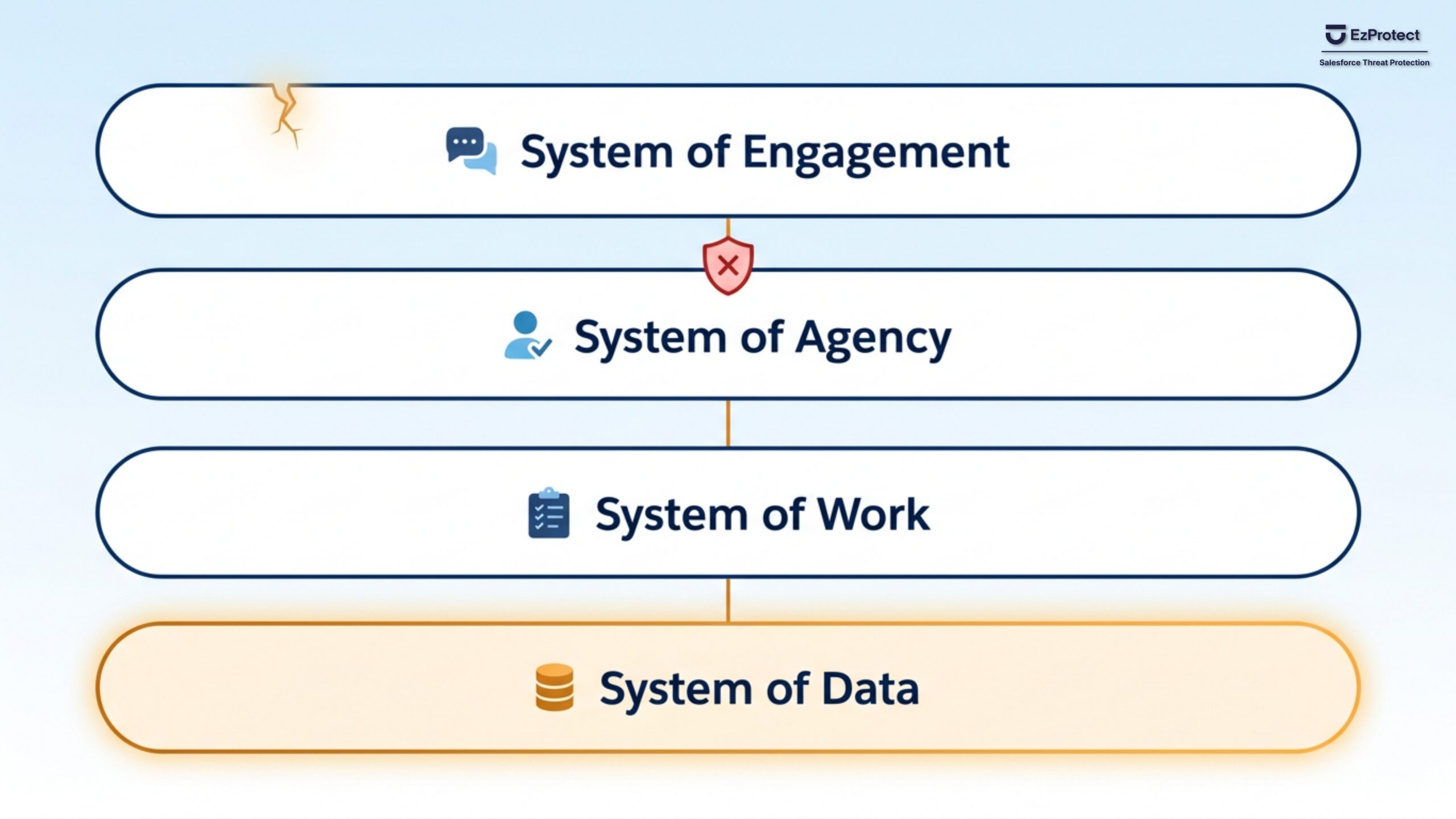
Salesforce Built Four Connected Layers. Attackers Are Already Inside One of Them.
Salesforce's new Agentic Enterprise architecture has four connected layers. Attackers are already inside one. What CISOs need to know.

Secure Custom Portal Architecture for Architects: Building on Salesforce as Your Data Source
Jessie Grenfell breaks down secure Salesforce portal architecture: JWT auth, row-level security in Apex, record ID obfuscation, and MuleSoft vs. AWS.
Salesforce Configuration Drift: A DevSecOps Security Guide
Richard Clark and Matt Meyers break down Salesforce configuration drift, DevSecOps, and change tracking to stop breaches before they start.