
Share

Most Salesforce teams don’t have a breach response plan. IT security knows security but not Salesforce, and Salesforce teams know the platform but not security. That gap is where the damage happens.

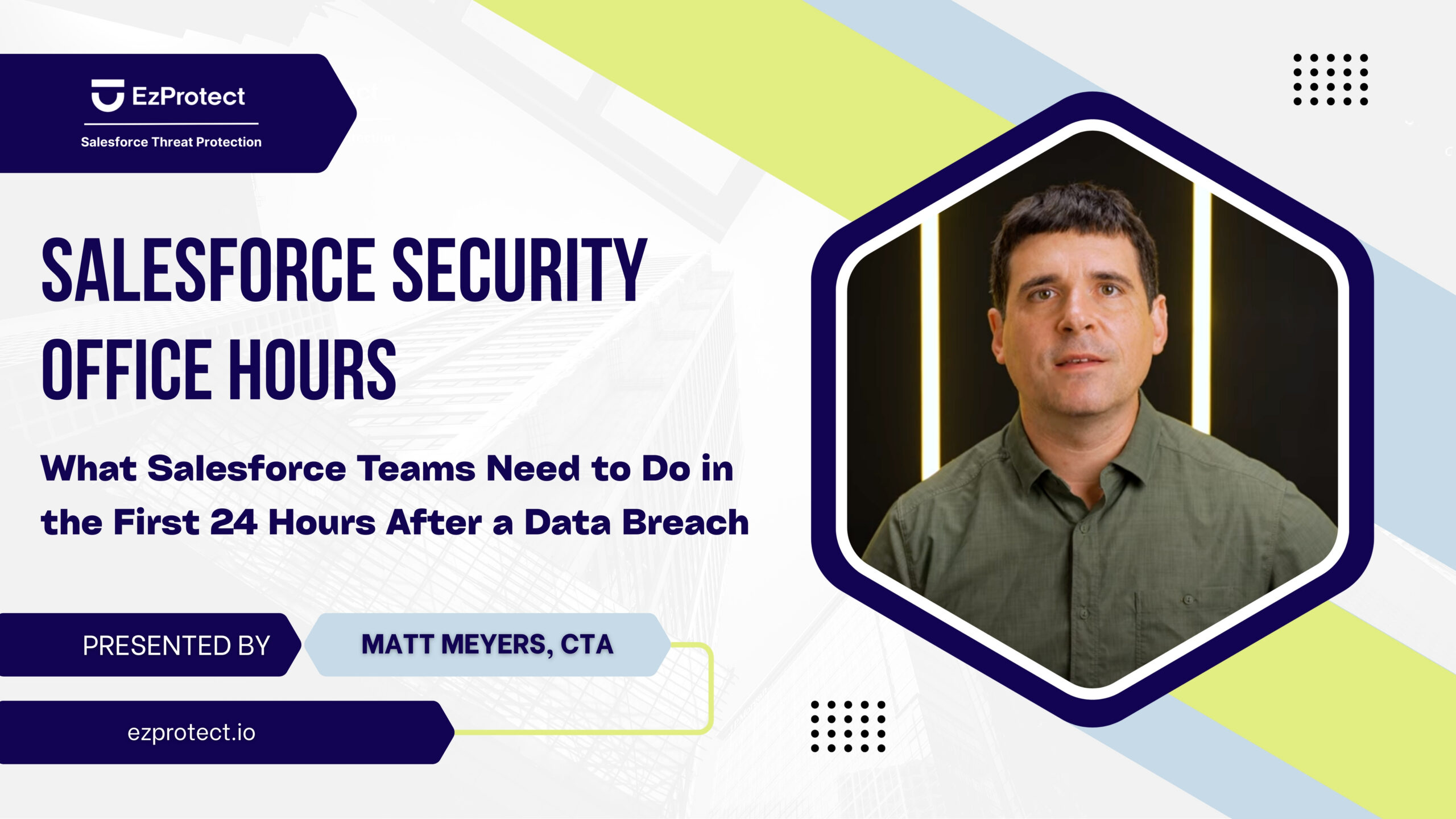
In this Salesforce Security Office Hours session, Matt Meyers, Salesforce CTA and CoFounder and CEO of EzProtect walks through the NIST Threat Response Lifecycle applied to Salesforce, covering detection, containment, recovery, and validation.
What you’ll learn:

  • Password resets don’t revoke OAuth tokens. Integration sessions using refresh tokens survive org-wide resets and must be revoked separately.
  • Your metadata needs the same scrutiny as your data. Attackers change Apex code, scheduled jobs, and routing logic silently. If you’re only checking records after a breach, you’re missing half the damage.
  • You need a firefighting team before the fire starts. Know who gets the call at 2 AM, what tokens get revoked first, and whether your cyber insurance covers a third-party connected app compromise.

The average breach goes undetected for 204 days, but the most damage happens in the first 24 hours if you do not have a strategy in place. Watch the session and build your plan before you need one.


Your Salesforce data is invaluable—is it truly secure? If you are allowing users to upload files into your Salesforce orgs, you are risk of also uploaded viruses and consequential data breaches. Get in contact with us today. 

Share

Did you love this blog and wish there could be more?

It is our goal to keep you informed about everything you need to know about Salesforce security to keep your Salesforce data and company safe and secure by providing you with the highest quality of original content.

If this sounds good to you, then sign-up below to be one of the first to know when the next super awesome Salesforce security blog has been released.
Download your free guide today!

Learn if you are at risk and how to start protecting your users!

GET THE FACTS NOW